
Conference Programme 2026
We have a very exciting and engaging programme lined up for this years NBE Conference. With a mix of inspiring talks and practical hands on workshops you'll leave conference feel revigorated and armed with new knowledge, techniques and ideas for your team - enabling you to provide the very best of care for your patients.
DOWNLOAD THE PROGRAMME HERE
Please note this is subject to change.
Plenary Sessions: |
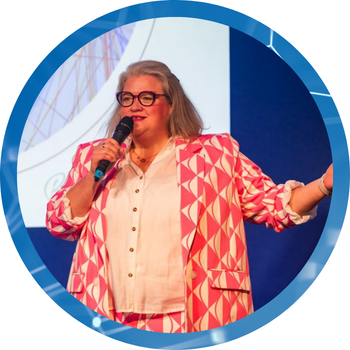
Beth Stallwood, speaker, consultant, facilitator, coach, podcast host and author
Session Title: Grounding Your Goals and Building Bolder Boundaries That Elevate Your Self-Care
You are all brilliant at caring for other people, that’s what you do! This often means that your self-care often slips down to the bottom of your list. This talk reframes self‑care as an important professional standard and not a ‘nice-to-have’ luxury.
In the talk, Beth will share three practical tools you can use immediately:
Goals that change your day. We’ll start by crafting one value-aligned goal that protects your energy and amplifies your impact. You’ll learn how to move from 'goal setting’ (which so often end up in the bin!) to the more realistic 'goal getting’ approach, by translating intent into small, repeatable actions that fit the realities of clinical and community care.
Building boundaries that help make those goals a reality. Using Beth’s Bouncy Boundaries model, you’ll identify a few non‑negotiables and consider where your free-flex boundaries may apply. You’ll then learn the tools of how to communicate your boundaries with both clarity and kindness.
Making choices under pressure. You’ll then learn how to apply Beth’s Pause–Ponder–Pick model in the moment to interrupt your automatic YES‑ing, check back with what matters most, and choose the next best step. Beth will also share how to say NO when you really need to!
You'll finish by making a simple commitment that you can share with a colleague or team to role‑model sustainable self‑care—because elevating your care elevates the care everyone receives.
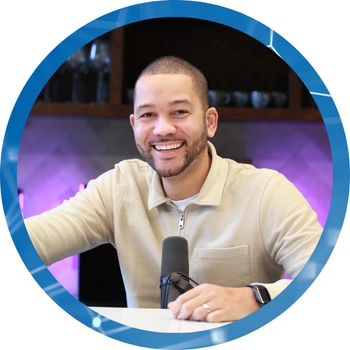
Anthony Bennett – Miracle Man – Inspirational & Motivational Speaker
Anthony Bennett is an inspirational speaker and motivational speaker & fundraiser who learned how to walk, talk and speak again after contracting three virus infections at the same time
In 2006, after returning from a school trip Anthony fell extremely ill and was left fighting for his life.
The cause was narrowed down to the air conditioning within the coach and affected 80% of students on the trip but left Anthony with 10% chance of survival after contracting 3 viral infections - Streph-Pneumonia, Influenza, and Staphylococcus.
After making a full recovery, Anthony played a major role in winning a £7.5m Charity Partnership between Whitbread PLC and Great Ormond Street Hospital Children’s Charity, where he spent 4 years traveling the UK and Inspiring teams to get involved in raising the much-needed funds for the children’s charity. The money raised went towards the construction of a brand new cardiac hospital wing, helping at the children’s hospital to treat up to 20% more children.
Now an International Speaker, Anthony inspires audiences globally
 Dr Dawn Benson, Public speaker, Academic, Educator, Campaigner, Investigator, COO
Session Title: Human Factors: Not About the Human
Every day, across healthcare, skilled and dedicated clinicians make hundreds of decisions about how to move, support, and care for people - often in conditions that are far from ideal. And yet incidents still happen. The question is - are we asking the right questions about why? In this session, Dr Dawn Benson, Chief Operating Officer of the Clinical Human Factors Group and one of the UK's leading voices in human factors science, brings her national expertise directly to the world of moving and handling. Drawing on her work at the intersection of patient safety, investigation, and policy - and grounded firmly in healthcare rather than borrowed from other industries - Dawn will explore what human factors really means for the people in this room, in the settings where you actually work. For those new to human factors, this will open a door. For those who already know the theory, Dawn offers challenge to how healthcare thinks about how far we have really come - and what genuinely embedding it would look like.
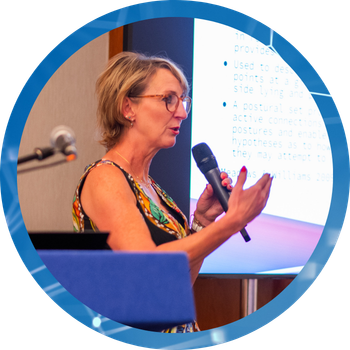
Penny Townsend, Moving and Handling Consultant, Specialist Neuro Rehabilitation Physiotherapist
Session Title: Understanding Postural Tone: Implications for Safe and Effective Moving and Handling Practice
This session explores the influence of normal and abnormal postural tone on movement and handling practices. By understanding the subtleties of postural tone, practitioners can enhance their performance during handling activities and positively shape staff approaches when supporting clients. Delegates will gain deeper insight into the subcortical, cortical, voluntary, and involuntary mechanisms that underpin normal human movement, and how pathophysiological changes disrupt these processes and affect clients’ ability to assist in movement. The plenary will include interactive elements and audience participation to encourage shared learning and practical application.
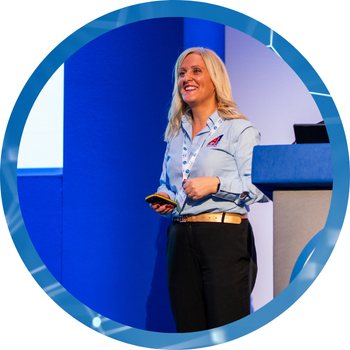
Norma Findlay, Head of Clinical Operations, A1 Momentum
Session Title: Historical Practices: Are we implementing avoidable harm?
In this plenary session, Norma Jane Findlay, Head of Clinical Operations, explores how historical care practices may still be contributing to avoidable harm today. Drawing on relevant case law and real-world lessons, Norma will examine how past decisions continue to shape current practice and what this means for patient safety. The session will highlight how learning from these cases can help elevate standards of care and drive meaningful improvements in clinical decision-making.
Confirmed Workshops: |
C01: When the Plan Meets the Person - SPONSORED BY FIVE
Lee Sherwood, Manual Handling Consultant, Elevate Handling
When the Plan Meets the Person is an interactive session where we will look at the gap between the plan, as written, the policy as implemented and the reality as found. The session will look at Dynamic risk assessment (DRA) as a teachable tool, and a named observable repeatable skill. It Introduces a look at a simple framework for checking a written plan or policy against the patient found at the bedside - what have we got, who is here, and what are we actually doing.
C02: Work as Imagined versus Work as Done: A Human Factors Perspective on Moving and Handling
Kerry Kemp, Ergonomist and Moving and Handing Service Lead and Joanne Barker, Senior Moving and Handling Wellbeing Practitioner and Charlotte Williams, Moving and Handling Wellbeing Practitioner
This interactive workshop explores the gap between “work imagined” and “work done” in moving and handling practice through a human factors and ergonomics lens. Delegates will develop a handling plan using policy guidance and professional experience before taking part in an immersive simulation where common workplace challenges emerge, including time pressure, fatigue, communication demands, environmental constraints, equipment issues and competing priorities.
Through observation and facilitated debrief, participants will identify where tasks are vulnerable to failure, examine key performance-influencing factors, and reflect on how working conditions shape decisions, adaptations and safety outcomes. The session concludes with the popular “left–right” teddy bear reflective activity, reinforcing teamwork, communication and shared learning in a memorable and engaging way.
C03: Maximising Safe Practice with M&H Positioning Wedges
Amanda Wells, Moving, Handling & Ergonomics Co-ordinator
This practical and interactive workshop explores how Manual & Handling (M&H) positioning wedges can be used to improve task effectiveness and reduce unnecessary moving and handling in health and social care settings. Attendees will learn how positioning wedges support the principles of safer handling, promote musculoskeletal health, enabling both patients and care givers to work in safer, more efficient ways. The session focuses on wedge application, clinical reasoning, and embedding wedges into everyday practice to enhance safety, comfort, and independence
C04: Moving with Dignity V Emergency Handling: Who is right?
Melanie Furness, Moving with Dignity Team Manager
This workshop explores a moving and handling case that went to court in 2025. The claimant said she had exacerbated an existing injury through manoeuvring a person from the chair to the floor. The defendant was successful in defending the claim. The workshop will bring together evidence taught in moving and handling training and first aid training and how this was utilised in defending the claim. Following the claim there have been further incidences where care staff working in the community have been advised to move a deceased person onto the floor to administer CPR or move someone onto the floor to administer CPR. The workshop will share current practice, policy review and how to manage risk when there is often contradictory advice from the call handler versus organisational practices.
C05: Using a risk matrix to support the balanced and reasoned assessment of risk from hazards associated with the manual handling of individuals who need assistance to move and to provide data that can be used to measure outcomes
Elizabeth Hallows, Independent Moving and Handling Specialist and Chartered Physiotherapist and Julia Maclean Independent Moving and Handling Specialist and Occupational Therapist
Provide data that can be used to measure outcomes Guidance from the HSE and in HOP7 requires that the manual handling assessments that we carry out are “balanced” such that the risks to both the handler and the person are assessed and reduced, whilst the person is at the same time assisted in ways that support their choice, dignity and comfort. Using a risk matrix enables the assessor to clearly identify the hazards and more objectively quantify the level of risk to each party. This supports the assessor in identifying possible solutions to reduce the risk in a balanced manner, shows clear reasoning and also enables a comparison between the “before and after” of interventions. Using a risk matrix can be especially helpful in situations where there are differences of opinion between people regarding the level of risk and the need for interventions. We will use a video clip of a scenario both before and after interventions, and will invite the attendees to complete the risk matrix using an app on their phones to illustrate our session. Delegates will have access to copyright-free manual handling risk assessment documentation incorporating a risk matrix.
C06: Applying SEIPS in Practice
Dawn Benson, Chief Operating Officer, Clinical human Factors Group
This one-hour workshop introduces the Systems Engineering Initiative for Patient Safety (SEIPS) framework and how it can be used to analyse and improve work systems in healthcare settings. Through a mix of brief presentation and hands-on activity, participants will explore the key components of the SEIPS model, including tools, tasks, environment, organisation, and the people at the centre, and consider how interactions between these components shape processes and outcomes. By the end of the session, you'll have a practical foundation for applying a systems lens to real workplace challenges.
C07: Managing Complex and Diverse Moving and Handling Situations - SPONSORED BY A1 MOMENTUM
Kat Stafford, Clinical Advisor at A1 Momentum and Kirsty Ryan, Clinical Training Manager and Occupational Therapist
In this practical workshop, Clinical Advisors Kirsty Ryan and Kat Stafford from A1 Momentum will explore strategies for managing complex and diverse moving and handling situations. The session will focus on conditions such as dementia, paratonia, and spasticity, and how these can impact safe handling practices. Through real case studies, attendees will gain practical insights and approaches to support safer, more effective care in challenging clinical scenarios.
C08: Repositioning in Bed for the Solo Carer: Practical Techniques Using an In-Bed Repositioning System and Positioning Wedges - SPONSORED BY: MIP
Julia Love, Manual Handling Advisor, LPS Training & Consultancy Ltd
This interactive, hands-on session led by Julia Love, Advanced Member of the National Back Exchange (NBE), focuses on repositioning techniques for individuals in bed, specifically tailored for the solo carer or handler. Known for her practical teaching style, Julia will guide attendees through real-life scenarios, encouraging active participation and skill practice throughout.
C09: What Have the Romans Ever Done for Us? (Can Artificial Intelligence Enhance the Work of Manual Handling Advisers?)
Carole Johnson, Freelance Manual Handling Adviser
Manual handling has moved well beyond its origins in technique-based ‘just do it’ physical lifting. Today, it is a fast evolving, multidisciplinary practice shaped by research, experience and continuous learning, where science, engineering and health advances intersect with human dignity, positive risk taking, policy and legal responsibilities. Across social care, education and acute settings, practitioners navigate complex decisions to support those in their care safely and compassionately. Artificial intelligence is becoming part of this evolving landscape. Does it have the potential to threaten our roles, take away our jobs? Could it make our lives easier by saving time and money, freeing us up to do what we are passionate about? To make the most of AI, we must understand both its potential and its limits. AI can already search, summarise and support documentation tasks, but can it offer more? Can it assist with aspects of our reasoning, analysis and problem solving, or does it risk making the Manual Handling Adviser as obsolete as some of the early strategies we once relied upon?
C10: Tackling Musculoskeletal Disorders in Early Years and Primary Education
Lorna Taylor, Physiotherapist and Founder
As evidence grows about musculoskeletal disorders (MSDs) in the early years and primary education sector for teachers and our future generation of workers, hear first-hand about latest research, interventions and signposting to support your practice and be able to share with others.
C11: Evidence-based tools to assist you implement Optimal-Handed Care
Deborah Harrison, Consultant and Jo Webb, Occupational Therapist
Optimal-Handed Care is currently being adopted across systems, with several case studies highlighting significant benefits (LGA, 2025, RCOT 2024). Research completed by Harrison (2017) identified a lack of appropriate tools to assist clinicians with their risk assessment process when reviewing or carrying out assessments to reduce care packages. Deborah Harrison and Jo Webb have developed a range of evidence-based tools to that will assist strategic leaders, project managers, clinicians and Moving and Handling Assessors. These tools structure and guide the risk assessment process, assist Moving and Handling assessors to assess the competency of the frontline staff using and evidence-based platform whilst collecting and analysing data to provide important metrics for the employers. The seminar will present an overview of all the tools, to assist everyone who is involved in Moving and Handling. The aim is not just to present the research and evidence-base behind these tools, but to make the tools freely available to those who wish to use them. After the National Back Exchange Conference we wish to share these tools initially with National Back Exchange Members and then with the wider community of national bodies.
C12: Breaking the Deconditioning Cycle: Scenario Based Approaches to Preventing Deconditioning Across the Care Pathway - SPONSORED BY MEDSTROM
Emma Tarpey, National Clinical Specialist for Deconditioning Prevention and Jeni Bryant, Clinical Nurse Specialist and Hywel Dda, University Health Board and Kirsty McLelland, National Bariatric Lead
This one‑hour scenario‑based workshop explores practical, realistic approaches to preventing deconditioning in complex patients throughout their journey in the acute sector. With the pressures facing the NHS and wider health and social care—rising admissions, corridor care, workforce shortages, increased acuity, and stretched resources—patients are at greater risk of functional decline from the earliest point of their care journey. Safe moving and handling practices, coupled with appropriate equipment use, communication, and a focus on patient‑centred dignity, are critical in breaking this cycle.
C13: How patients can contribute in protecting the caregiver: the practice
Robrecht (Robby) Vandevyvere, RN & Ergonomist and Norbert Hattink, BSc. Physiotherapist & Founder of Niveb
SPHM has delivered significant benefits, yet musculoskeletal injuries among caregivers remain persistently high. This session explores whether a key element is missing: the patient. Traditional SPHM frameworks focus on protecting caregivers by treating the patient as a load, but unlike inert objects, people can move, respond and participate.
Introducing the “weight-less” approach, this session reframes moving and handling as a collaborative process in which caregivers facilitate rather than carry. Drawing on principles of physics, biomechanics, physiology and feedback-control, it demonstrates how active patient participation can reduce caregiver strain while improving patient outcomes, dignity and independence.
Supported by evidence from person-centred care, early mobilisation and neuroscience, the session shows how enabling movement can enhance recovery, reduce complications and create safer, more sustainable care for both patients and caregivers.
C14: Innovative Hoisting Techniques in Panniculectomy: The Evolving Role of the Manual Handling Adviser in Bariatric Surgery
Martin Thomas, Strategic Manual Handling Adviser and Debbie Thomas, Manual Handling Trainer Adviser
For over two decades, manual handling advisers have helped develop safe systems for patient positioning in theatre. However, increasingly complex bariatric procedures, such as panniculectomy, present new challenges that require innovative approaches beyond traditional techniques.
Using a clinical case study, this session follows the patient journey from pre-operative planning to intraoperative management, showcasing the multidisciplinary collaboration, risk assessment and preparation required. Particular focus is given to the safe, risk-assessed use of hoisting equipment during surgery to support positioning and tissue retraction.
The presentation highlights the evolving role of the manual handling adviser as an integral member of the surgical team, demonstrating how innovative practice and close collaboration can improve surgical access, enhance safety and support better outcomes for both patients and staff.
C15: Handling a person on the bed: available evidence and practical application
Elizabeth Hallows, Independent Moving and Handling Specialist and Chartered Physiotherapist and Julia Maclean Independent Moving and Handling Specialist and Occupational Therapist
This session will explore relevant evidence and guidance relating to the biomechanics of handling a person on the bed and how this can inform assessment, clinical reasoning and practical handling. Tasks involving assisting a person to move on a bed are commonplace across many health and social care settings, often for reasons of care delivery such as assisting the person to wash, dress, reposition and to redistribute pressure. There is published evidence that a higher level of exposure to undertaking these tasks is associated with a high prevalence of musculoskeletal disorders amongst health and social care workers. An understanding of biomechanics will assist moving and handling assessors to come to reasoned conclusions regarding risk, identify methods and equipment that may enable the client and reduce risk and also inform the detail of practical handling.
C16: Paediatric Assessment - includes complex case studies, and encourages a problem solving approach
Pat Alexander, Director, Alexander Handling Training
The session is aimed at manual handling advisors working, or hoping to work, in paediatrics. It consists of 3 case studies, which will be studied by each of three groups in turn, requiring delegates to devise a solution. Some situations will be illustrated by photos, and others by hands on work with a variety of equipment. These case studies will include working in a neo-natal special care unit (NICU), a school and in a child’s own home. This group work will be followed by a plenary session, when groups will be encouraged to discuss their suggestions, and may decide that there are several possible solutions. They will then be asked to give their reasoning for their chosen one. By taking part in this discussion, newcomers may become more familiar with the problems in each setting. This may enable them to reflect on, and use this information in their own setting.
C17: The Power of Air – clinical application of air-assisted patient transfer solutions throughout the careflow - SPONSORED BY ARJO
Carol Sinden, Global Director, Medical Affairs – Patient Handling and Hygiene, Arjo
Air is invisible but its power is unmistakable. Harnessing this power in air-assisted patient handling devices is well known for it's ability to laterally transfer from one surface to another - but their place in the careflow is key for other patient handling activities such as repositioning, changing bed linen and supporting in side-lying, for example. The same principle is now being adopted as a preferred and best practice method for falls management.
C18: Tone, Proprioception and Risk: Understanding Protective Responses in Moving and Handling
Dani Paige, SupportiveAction, Director & Moving and Handling Practitoner
This workshop explores why protective responses frequently occur during moving and handling tasks that are planned correctly and use appropriate equipment. The session begins by focusing on what staff commonly observe in practice, such as stiffness, gripping, pushing away, or increased tension during transfers. These responses are often described as resistance but are more accurately understood as protective reactions when movement feels unpredictable. Participants will then explore the role of tone and proprioception in movement and how reduced sensory predictability can influence a person’s response to handling tasks. Using familiar moving and handling scenarios, the workshop links these responses to increased handling risk for staff.
C19: What Do We Mean by “Allow the Person to Fall”?
Lee Dart, Lead Physiotherpist
This workshop shares and builds on the experience and outcomes from the YBE Manual Handling workshop delivered in March 2026, and revisits the subject of what we mean when we say “allow the person to fall”. In my experience, this is frequently misunderstood. It is a complex area that can leave trainers lacking confidence and clarity, and in turn leave staff unclear about their responsibilities. The session begins by acknowledging that much of the work lies in planning, prevention and risk reduction before an incident occurs. It then explores the question: what is a fall, what do we mean by allowing a person to fall, and why? An interactive group exercise will focus on real-world scenarios. Participants will suggest examples from practice and work together to identify why such situations do not automatically lead to a decision not to mobilise, and what control measures might support safer practice. In scenarios where the likelihood may be deemed very low, but a fall event nevertheless occurs, for example following seizure, spasm, TIA, or a reaction to a sudden unexpected change in the environment such as a fire alarm, the workshop will use visual resources to discuss a handling strategy for failing transfers, known as a “redirect”, before exploring the “controlled lowering of the falling person” in a failing mobilisation, followed by practical exploration using a mannequin. It will emphasise that these are not planned strategies for mobilisation, but that teaching them may help replace an untrained instinct to catch a falling patient with a safer response. Finally, time for questions and discussion will allow participants to test the ideas against their own settings and experience.
C20: How the Sensory Systems can impact manual handling
Caroline Robinson, Senior Occupational Therapist, Essex County Council
The workshop will briefly explore sensory integration theory has been incorporated into adult social care in Essex, which has marked a significant shift in practice. Appreciating that until then, awareness among social care professionals was limited as sensory processing was not an area of practice that would have traditionally sat within this workforce. The sensory systems are the foundation of functional abilities, with sensory processing being important in all daily tasks. The workshop will explore the concept that manual handling people with sensory differences may illicit responses that could lead the person to being labelled as ‘challenging’, whereas if we understand their sensory differences better we can potentially enable more considered and dignified outcomes.
C21: First-in-UK innovation: Automating Lateral Transfers in Radiology with Atle 180: Improving Staff Safety and Patient Experience
Valerie Phillips, Moving and Handling Ergonomics Service Lead
This workshop aims to share evidence and informed learning from the introduction of the automated Atle 180 lateral transfer device within an NHS acute Trust, demonstrating how automation can significantly reduce musculoskeletal risk associated with lateral patient transfers while enhancing patient dignity and staff wellbeing. The session will focus on moving away from reliance on individual physical effort towards system-level risk reduction through ergonomically designed solutions.
C22: Lisclare and the 18 to 30 Club - SPONSORED BY LISCLARE
Keith McMurray, Sales Director, Lisclare
Keith McMurray, Product Specialist from Lisclare will be discussing the issues surrounding plus size patients weighing between 18 to 30 stone. When a plus size patient is being cared for, often the bariatric equipment supplied is for someone weighing 30+ stone. However, most of the patients currently in the UK classed as 'plus size' fall into the 18 stone to 30 stone category. This means when bariatric equipment arrives, it is not fit for purpose as it has been developed for much larger patients in mind. Our Product Specialists and Product Assessors have seen this situation arise too many times over the last 40 years. It leaves the patient feeling uncomfortable and the carer not able to provide the best and appropriate care.
C23: Supporting Sex and Intimacy in Practice: Positioning, Moving and Handling, and Professional Boundaries
Dani Paige, SupportiveAction, Director & Moving and Handling Practitoner
This workshop focuses on the practical realities of supporting disabled people with sex and intimacy, with particular attention to moving and handling, positioning, and physical support needs. The session explores how intimacy-related activities can raise uncertainty for staff, particularly where movement, positioning, equipment, or physical assistance may be required. Rather than avoiding these situations, the workshop supports professionals to think practically and safely about how moving and handling principles can be applied while maintaining dignity, consent, and clear professional boundaries. Using realistic practice scenarios, participants will consider positioning, support needs, and environmental factors, alongside legal and ethical considerations, to support safer, more confident decision-making in this area of practice.
C24. From Data to Diagnosis: How AI Enhances Musculoskeletal Health - SPONSORED BY CARDINUS
Jon Abbott, Director, Cardinus Risk Management
This session explores how modern AI technology is transforming the way organisations identify, assess and prevent musculoskeletal (MSK) risks in the workplace. Using insights from sports science, motion capture and advanced analytics, it demonstrates how AI can identify ergonomic hazards, analyse movement patterns, predict injury risks and streamline assessments, helping organisations deliver faster, more proactive interventions that improve wellbeing and reduce costs.
C25: Organisational Transformation in Moving and Handling Practice: Two Distinct Case studies Unlocking £1.45 Million in Savings
Adam Ferry, Occupational Therapist
This presents the outcomes of two large-scale organisational change initiatives. Focused on improving Moving and Handling practices across Social Care providers, whilst simultaneously clearing a backlog of assessments. A comprehensive programme was implemented, combining evidence-based training, ergonomic equipment deployment, and a culture shift towards proactive risk management. The initiative was rolled out across multiple departments, engaging frontline staff, managers, and occupational health specialists. Key interventions included standardised handling protocols, targeted competency development, and continuous monitoring of compliance. Data analysis over a 12-month period revealed productivity gains were observed through streamlined workflows. The financial impact was striking: the organisation achieved £1.45 million in direct and indirect savings, demonstrating the tangible value of embedding safe handling practices. These findings align with wider evidence on Optimal Handed Care, which has been shown to improve patient dignity, independence, and system efficiency while reducing workforce strain (RoSPA, 2025; Care England, 2024; LGA, 2025). Beyond cost reduction, the initiative fostered a safer working environment by using unique techniques (Harrison, D and Webb, J. 2024) that reduced strain and potential injury. This case study highlights how strategic investment in Moving and Handling practice can deliver both economic and human benefits, offering a replicable model for other organisations seeking sustainable improvement.
C26: Rethinking Bariatric Repositioning: Integrating Body Habitus, Biomechanics, and Ergonomics
Anita Rush, Bariatric Consultant & Ergonomist and Mark Ripley RGN Director of Education (Ethos) Direct Healthcare Honorary Lecturer
Repositioning bariatric individuals in bed remains one of the highest risk manual handling activities across health and social care. Traditional assessments often prioritise body weight, yet clinical and ergonomic practice consistently show that weight alone does not reflect the complexity or risk involved. What matters is not only how much mass is being moved, but how that person’s unique body shape, distribution of mass, and functional abilities influence moving and handling. This workshop introduces a clinically informed, person centred approach that integrates biomechanics, ergonomics, and body habitus assessment into practical decision making. It examines how each individual’s shape, mass distribution, centre of gravity, limb dynamics, mobility and the interaction with bed systems and equipment influence safe and effective repositioning. Although body habitus is widely used in bariatric surgery, anaesthesiology, and radiology, it is rarely applied in manual handling. This workshop demonstrates how adopting a habitus aware, individualised approach improves patient comfort and dignity while enhancing staff safety and confidence. We acknowledge the importance of sensitive, person centred language; however, for clarity, the term bariatric is used throughout.
C27: Art or Science? Exploring Sling Selection in Hoisting Practice
Professor Mike Fray, Chairman, Loughborough Alumni Research Forum
Selecting the correct hoist sling size is widely recognised as a critical component of safe moving and handling practice. This workshop explores whether sling selection is purely a science based on measurements and manufacturer guidance, or whether professional judgement also plays a significant role. Using a selection of universal hoist slings from different manufacturers, participants were measured according to each manufacturer’s sizing guidance and lifted using the recommended sling size. Subject matter experts then reviewed the fitted slings and provided their professional opinion on suitability, considering factors such as back length, shoulder width, hip positioning, and leg strap length. Participants rated their perceived safety/security and comfort/discomfort using a five-point bipolar Likert scale. The study brings together three perspectives: manufacturer guidance, expert practitioner judgement, and the lived experience of the sling user. This interactive session will present the study findings and invite delegates to reflect on the complexities of sling selection in practice. Participants will explore how measurement guidance, professional expertise, and user feedback interact when determining sling suitability, and consider the extent to which sling selection can be standardised or whether practitioner judgement remains essential. The workshop aims to stimulate debate and support practitioners to critically reflect on how evidence, guidance, and experience combine to inform safe, effective, and person-centred moving and handling practice.
C28: The safer and cost-effective way to reduce and treat pressure ulcers with comfort and dignity - SPONSORED BY: Hospital Direct
Bruce Gutteridge, Designated Director of Sales & Marketing, Hospital Direct
Pressure ulcers cost the NHS £22.4 million PER DAY. The average cost of treatment is £11,703.54 per pressure ulcer. Over 700,000 people are affected each year; 180,000 are newly diagnosed per annum (https://www.spinal.co.uk/news/stop-the-pressure-day-2025/). Preventative interventions include the use of pressure redistribution equipment, regular turning and repositioning (https://wounds-uk.com/made-easy/made-easy-repositioning-for-pressure-ulcer-prevention/ ). Many patients often have reduced levels of mobility, necessitating at least two staff for repositioning and, with bigger and/or more dependent patients, additional staff may be required. Staff dressing ulcerated legs frequently have to adopt high risk positions such as stooping and twisting. Often legs requiring dressing are heavy and require supporting for long periods of time whilst treatment is administered. In this workshop, Hospital Direct will show you how to reduce the incidence of tissue viability problems occurring and will show how to reduce staff injury whilst cleaning, moving and treating lower limbs with existing and new products they have launched to the healthcare sector. These can be used in the acute, community and homecare environments. All of this is achieved whilst promoting patient care, comfort and dignity. This represents savings regarding the amount of staff required when considering both prevention and treatment options, the avoidance of treatment costs that would have occurred if ulcers had developed, and the way that the health service can minimise risk to staff that are treating patients with lower limb vascular conditions whilst maximising their staff resources.
C29: Beyond Technique: Using virtual Reality to Teach Bariatric Moving and Handling Decision-Making, Safety, and Dignity
Caz Hales, Associate Professor, Victoria University of Wellington, New Zealand
Moving and handling people of larger size is a high-risk, high-anxiety activity for healthcare staff, with consequences for staff injury, patient safety, and dignity of care(1). Conventional education prioritises physical techniques and equipment use, but often neglects clinical decision-making, safety culture, and the influence of weight bias on practice(1-3). This interactive workshop introduces a prototype virtual reality (VR) bariatric care education platform that incorporates moving and handling features designed to address conscious and unconscious educational gaps. Through instructor-led demonstration, immersive scenario walkthroughs, and facilitated discussion, attendees will explore how VR can support decision-making, confidence, and culturally safe care without placing patients or staff at risk. The workshop combines theory, demonstration, and reflective discussion, rather than hands-on skills practice, making it suitable for diverse professional audiences and conference settings.